Solo operators launching DTC
You are pre-revenue or sub-1,000 orders/month. A warehouse lease would kill the launch. 3PL is the only sensible path.
If you are a one-person operator launching DTC, a warehouse contract will eat your runway. Dropship fulfillment lets you launch without leasing space, hiring pickers, or learning what 'chargeback' means. The 3PL stores your inventory, picks individual orders against your Shopify or Amazon Seller Central feed, packs in your branded mailer or carton, and hands the package to a carrier. You pay per inbound case, per pick, per package shipped. Margin discipline matters more here than in any other private-label decision — a $0.50 swing on pick-pack rate moves your unit economics by 5-10 percent.
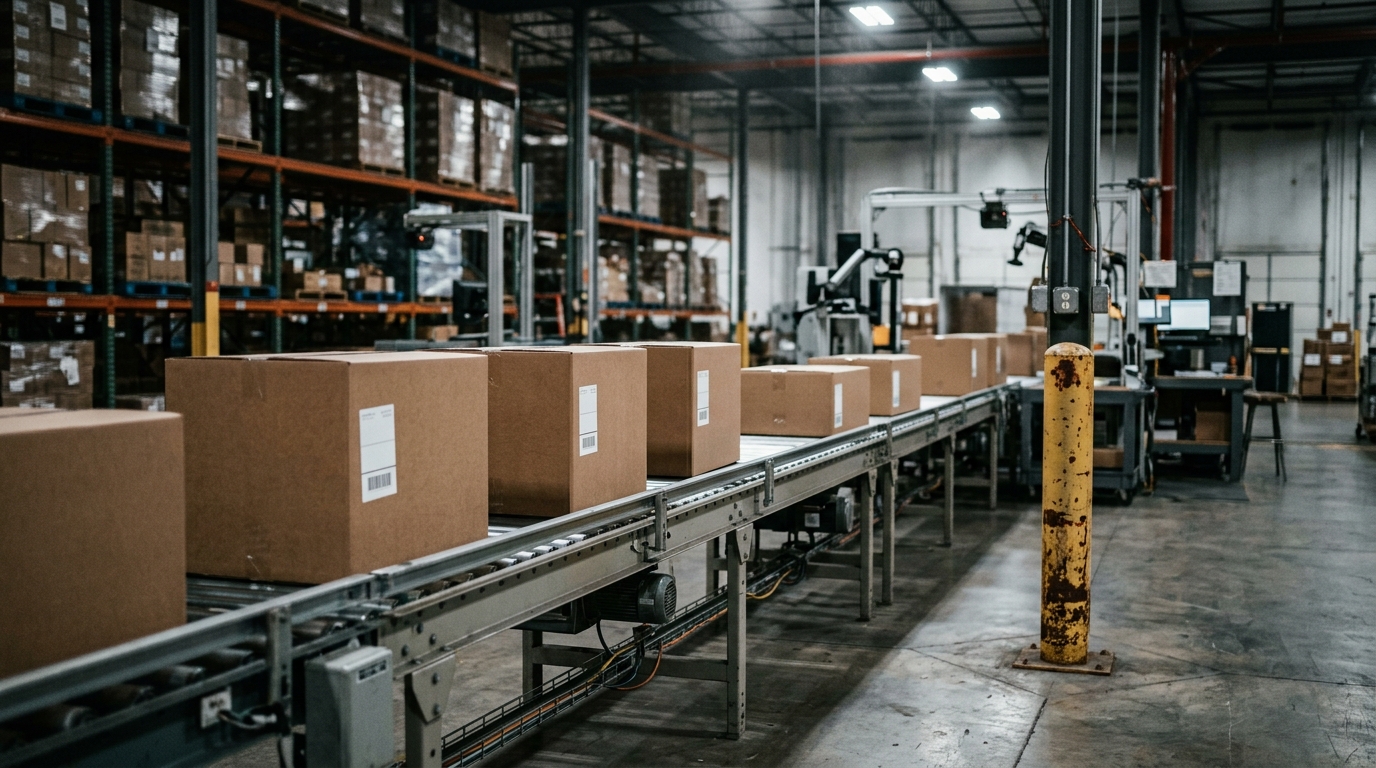
Buyers conflate these. The factory does not. Here is the real spread.
| Dropship Fulfillment | Self-fulfillment | Amazon FBA | |
|---|---|---|---|
| Capital required | Per-pick variable; no lease | Warehouse + headcount + insurance | Inventory cost + FBA fees |
| Channel flexibility | DTC + Amazon + retail | Maximum control | Amazon-locked |
| Brand experience | Custom mailer + insert | Total control | Amazon-branded box |
| Volume break-even | Below 5,000 orders/month | Above 5,000 orders/month | Amazon-only catalog |
You are pre-revenue or sub-1,000 orders/month. A warehouse lease would kill the launch. 3PL is the only sensible path.
You sell DTC + Amazon FBM + Etsy + wholesale. You need one warehouse pool that feeds all channels. 3PL beats FBA at multi-channel.
You ship recurring orders to the same customers monthly. You want a 3PL with subscription-aware pick logic and SLA on consistency.
FBA fees are eating margin at scale. You are evaluating splitting Amazon FBM via 3PL and keeping FBA only on bestsellers. The crossover is around $1M annual GMV.
Volume estimate, SKU count, channel mix (DTC, Amazon, retail), packaging requirements, returns policy. We map 3PL candidates by volume tier and category fit.
Three rate cards in apples-to-apples format. Inbound receiving + storage + pick + pack + carton + returns + carrier rate. We flag the gotcha lines (long-tail SKU surcharges, 3PL minimums, special-handling fees).
Cart integration (Shopify, WooCommerce, Amazon Seller Central, Etsy). SKU master setup. Inbound BOL templates. Returns + RMA SOP. Insert and mailer spec.
First inbound case received. Putaway. Test orders shipped. Carrier rates audited. Live order routing engaged.
// Total4-5 weeks from brief to first orders shipping. Onboarding is the long pole — the rate-card audit and integration testing eat most of the calendar.
Dropship fulfillment economics live in three lines on every invoice: pick-and-pack, storage, and outbound shipping. Most operators focus on the headline pick rate and miss the storage or special-handling lines that actually move the math.
| Format | First-run MOQ | Reorder MOQ | Lead time |
|---|---|---|---|
| DTC pick-pack-ship | — | — | 4-5wk onboarding |
| Amazon FBM via 3PL | — | — | 5-6wk onboarding |
| Subscription routing | — | — | 5-7wk onboarding |
| Wholesale + retail B2B | — | — | 4-6wk onboarding |
/ All ranges are typical industry figures. Final unit cost depends on fill weight, container, label, certifications, run size. Quote against your specific brief.
Every line below has cost a real operator real money. We have seen each of them. Here is the tell, and the fix.
// Tell
Headline pick rate is $2.20. Total per-order cost is $4.80 after carton, insert, special handling, label printing, and SKU surcharges.
// Fix
Run a per-order all-in calculation on actual order shapes — not the headline rate. Ask for sample invoices from a similar brand at the 3PL.
// Tell
Cycle count shows fewer units than ERP. 3PL claims it never received the missing case.
// Fix
Inbound BOL with quantity verification at receiving. Annual full count. Hold a small reserve in the inventory model — 3PL shrinkage is usually 0.5-2 percent.
// Tell
Orders stop syncing. Customers email asking where their package is. You discover via Shopify, not the 3PL.
// Fix
Daily order-count reconciliation. Alert when orders processed by 3PL diverges from orders placed in cart. SLA on integration uptime.
// Tell
Customer returns a unit. 3PL receives it. Six weeks later the unit has not been restocked, refunded, or refused. Cash sits in limbo.
// Fix
RMA SOP with named SLA — return processed within 5 business days. Visibility into return queue. Monthly returns report.
// Tell
Summer heat waves push warehouse temp above 80°F. Supplement actives degrade. Cosmetic SKUs separate.
// Fix
Confirm climate-controlled storage in writing if the SKU requires it. Climate is a real cost line — operators try to skip it and eat it on shrink.
3PL certifications matter less than 3PL audited performance. Look for SQF certification on any 3PL handling food or supplements, FDA registration if they do any pick-pack of OTC products, and CTPAT for cross-border shipping.
Required for any 3PL that holds OTC drugs or some supplement categories. Confirm via FDA's registration database.
View source →Required for any 3PL handling food and beverage. Audit-based food safety standard.
View source →US Customs Trade Partnership Against Terrorism — required for any 3PL that imports from your manufacturer overseas.
View source →/ All citations verified against the issuing body's published page. Last verified: 2026-05-10.
Six fields. We come back inside 36 hours with three sourcing routes — MOQ, lead time, indicative cost on each.
Open quote form → [02] ToolThe one-page brief format any GMP-aware factory will quote against in 48 hours. Free.
Download PDF →We'll come back inside 36 hours with three sourcing routes, MOQ + lead time + indicative cost on each.